Fontana Historic Timeline (1813-2005)
Redevelopment and the Modern Era (2004–Present)
2005: Fontana High School celebrates its 50th anniversary.
2004: The Hazel Putnam Plaza opens. Restoration of the 1912 Pacific Electric station and St. Anthony’s Chapel.
1990s: California Speedway, now Auto Club Speedway, built on land of former Kaiser blast furnaces.
1988: Fontana marks its 75th anniversary.
1987: Independent audit reports city near bankruptcy after heavy redevelopment debt.
1984: California Steel Industries begins operations at former Kaiser site. Imported steel slabs rolled.
1983 (December 31): Primary steelmaking at Kaiser Steel ends after years of foreign competition and financial loss.
1981: Village of Southridge breaks ground. Shift toward large planned housing developments.
The Kaiser Era. Industrial Period (1942–1983)
1974: Fontana Historical Society founded to preserve local history.
1963: Long Range Sharing Plan formed. Automation integrated into steelworker labor agreements.
1961: Current City Hall dedicated on Sierra Avenue.
1952: Fontana incorporates as a city.
1946: Hell’s Angels motorcycle club founded in Fontana.
1945 (December): Fire and murder of the O’Day Short family. Event exposes racial conflict in the city.
1942 (December 30): 1,200 ton blast furnace “Big Bess” fired for the first time at Kaiser Steel.
1942: Henry J. Kaiser begins construction of Kaiser Steel Plant to supply steel for World War II.
The Miller Era. Agriculture Expansion (1901–1941)
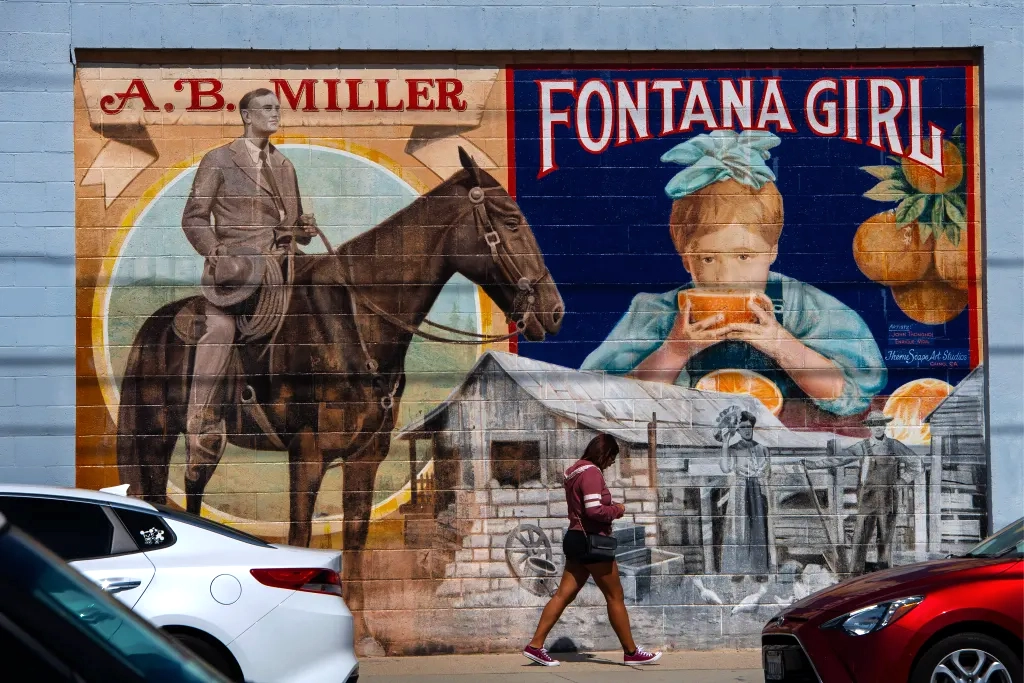
1941 (April 18): A.B. Miller dies on Easter Sunday. End of founding agricultural era.
1937: Fontana Theatre opens. Construction cost $45,000.
1936: Bono’s Italian Market and orange stand established.
1928: U.S. Experimental Rabbit Station built on land donated by Miller.
1926: Fontana Community Church constructed.
1924: Fontana Inn built. Social center for visitors and land buyers.
1923: First Fontana Days celebration held.
1921: Miller signs agreement with Los Angeles. 600 tons of wet garbage shipped daily by rail to feed hogs.
1920: Largest hog ranch in the world established in Declez area.
1918: Fontana Farms Company organized.
1914–1915: Citrus Packing House built. Only concrete citrus packing facility in California at the time.
1913 (June 7): Fontana town site dedicated. Train arrives from Los Angeles. Public barbecue held under circus tent.
1905–1906: A.B. Miller arrives in Rosena and begins purchasing land.
1901: Fontana Development Company purchases land.
The Early Era. Spanish Grants and Settlement (1813–1890s)
1892: John Burdick purchases land from Mr. Fountain. Name Fontana appears on deed.
1887: Santa Fe Railroad builds line toward Los Angeles. Stop named Rosena.
1875: Southern Pacific Railroad reaches San Bernardino Valley.
1866: Alexander and Sarah Perdew settle Grapeland area. Irrigation built with dirt ditches from canyon water.
1860s: San Sevaine brothers build home and winery. Early champagne production reported.
1857: Mormon colonists leave San Bernardino Valley after recall to Salt Lake City.
1851: Lugo family sells Rancho lands to Mormon settlers.
1842: Rancho de San Bernardino grant issued to Lugo sons and Diego Sepulveda. Total 137,700 acres.
1813: Don Antonio Maria Lugo receives early land grant in region.


![[background image] image of busy office environment (for an hr tech)](https://cdn.prod.website-files.com/6992824e15ae5894aec7efd5/6996eb77892acc2afd8efd2b_Fontana-Library_22_071-1024x681.webp)
.webp)